
Carbon Balance in Soil, Air, and Cereal Crops: Crop Physiological Responses and Agronomic Strategies to Mitigate Climate Change and Sustain Productivity
Pages 62-72
https://doi.org/10.48309/jase.2025.551776.1093
Gebrekidan Henok Heluf
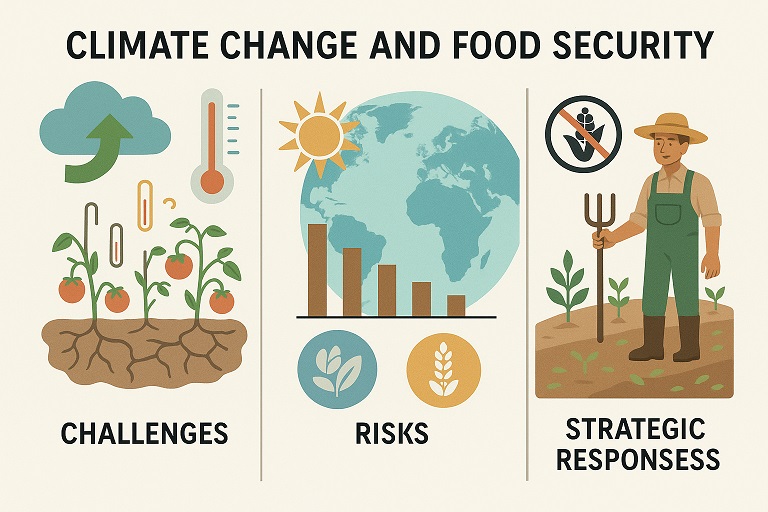
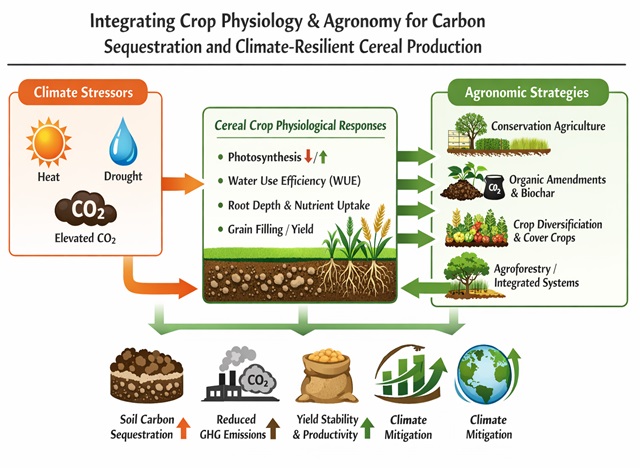
Abstract: This comprehensive review examines the critical interactions between climate change, carbon balance, and cereal crop productivity, with a strong emphasis on carbon sequestration and climate-smart agricultural practices. Climate change poses substantial risks to cereal-based food systems through increased frequency and intensity of drought, heat stress, and variability in rainfall patterns, leading to yield instability and declining soil health. To sustain cereal productivity and global food security, adopting climate-resilient crop varieties, improved nutrient and water management, and soil conservation practices are essential. The review highlights the role of soil carbon sequestration as a key climate mitigation strategy, emphasizing the contribution of conservation agriculture, organic amendments, diversified cropping systems, and biochar application in enhancing soil organic carbon stocks while reducing greenhouse gas emissions. Crop physiological responses to climate stress, including changes in photosynthesis, water-use efficiency, and nutrient uptake, are discussed in relation to their influence on carbon dynamics and yield formation. Despite the mitigation potential of these approaches, significant challenges remain in their large-scale adoption, particularly in smallholder farming systems. Integrated strategies that combine crop breeding, agronomic management, and supportive policy frameworks are therefore crucial for developing resilient, productive, and environmentally sustainable cereal production systems under a changing climate.